Is Intensity Casino Trustworthy? Licence and Reputation Review
 Available in US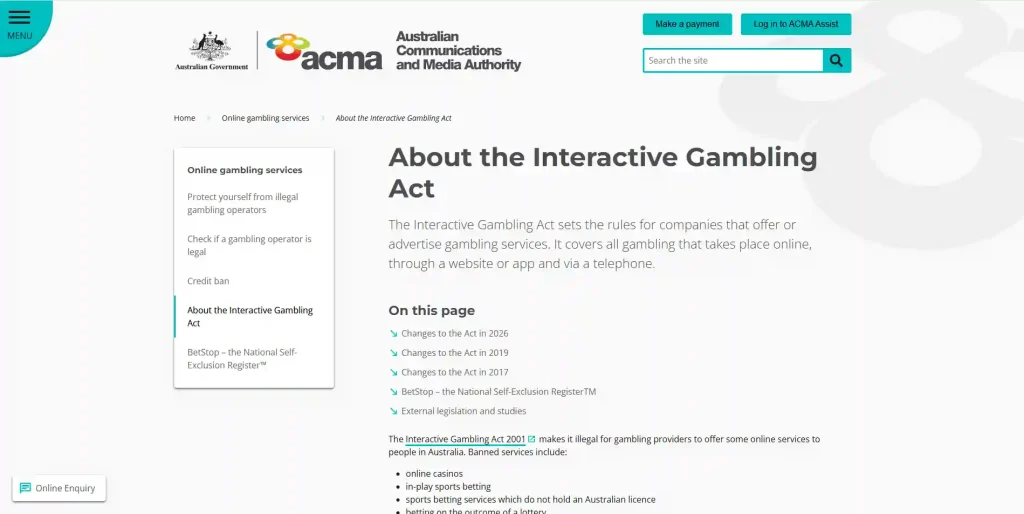
No Australian local licence or register entry for Intensity Casino was verified in the current ACMA licensed interactive gambling provider register. Multiple web sources describe Intensity as operating under Curaçao licensing, but the exact current offshore authority and licence number conflict across sources, so this review does not present a specific number as verified. Australian access also needs precise wording: the canonical brand-facing property targets Australian readers and exposes registration controls, while a separate Intensity-branded property says Australian residents are not eligible to register.
For the broader product and Australia context, see the Intensity Casino Australia review.
That evidence does not support a simple “safe” or “scam” label. A better trust assessment separates six questions: Australian regulatory status, offshore licensing evidence, current domain identity, account verification, withdrawal controls, support and responsible-play features. The detailed provider-side legal and access distinction is covered on the Australian legal context.
Table of Contents
- Trust verdict: use an evidence checklist, not a badge
- What the ACMA register result means
- What can be said about Curaçao licensing?
- Australia access is a separate question
- KYC, withdrawals and account controls
- Support and responsible-play signals
- How much weight should user reviews carry?
- A reproducible Intensity Casino trust checklist
- Practical red flags to investigate
- How to interpret mixed reputation signals
- FAQ
- Current source note
- Is Intensity Casino Trustworthy? Licence and Reputation Review
Trust verdict: use an evidence checklist, not a badge
Intensity Casino has several ordinary operational signals: current sources support 24/7 live chat, identity verification as part of payments, and responsible-play tools including limits and self-exclusion. The canonical site is live and presents an Australia-focused casino interface. Those are useful facts, but none substitutes for local licensing. In Australia, ACMA’s legal-provider register is the key public check for licensed interactive wagering operators, and no Intensity or Jacked match was found in the current register search.
That result should be read narrowly. It means no Australian local register entry was verified. It does not by itself prove that every Intensity-branded domain is blocked, that a particular player can or cannot create an account, or that a specific withdrawal will fail. Likewise, the absence of an Intensity match in the ACMA blocked-sites page checked for this review is not an endorsement. A blocked-site list records enforcement actions, not a whitelist of approved casinos.
| Trust question | Current evidence | Practical reading |
|---|---|---|
| Australian local register entry | No Intensity or Jacked match verified. | Do not describe Intensity as Australian-licensed. |
| Offshore licence | Multiple sources describe Curaçao licensing, but exact current details conflict. | Do not rely on an unverified licence number. |
| Australia access | Published Intensity-branded properties conflict. | Check live eligibility before registration. |
| Support | 24/7 live chat is supported by current sources. | Useful for account and payment questions, not proof of regulatory protection. |
| KYC | Identity verification is part of account/payment processing. | Expect identity checks to matter around account security and withdrawals. |
| Responsible play | Limits and self-exclusion tools are reported. | Confirm the live controls available on your account before relying on them. |
What the ACMA register result means
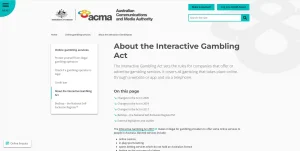
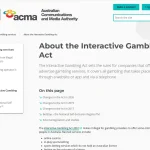
ACMA states that an online wagering service must be on the register of licensed interactive gambling providers to operate legally in Australia. The register is designed around licensed wagering providers. Australia does not operate a normal local licensing category for online casino services equivalent to offshore casino licensing regimes. The Interactive Gambling Act prohibits providers from offering online casino services to people in Australia.
Against that background, searching the current ACMA register for “Intensity” and “Jacked” produced no match. That supports the narrow statement used throughout this site: no Australian local register entry for Intensity Casino was verified. It would be inaccurate to turn that into “Intensity has an Australian licence” or to imply Australian licensed-provider protections apply.
ACMA also uses website blocking as an enforcement measure against illegal gambling and affiliate sites. Its July 2026 update said 1,774 illegal gambling and affiliate websites had been blocked since blocking began in November 2019. The visible July list did not contain “Intensity.” Again, absence from one checked blocking list does not mean approval. It only means that name was not found in the checked material.
What can be said about Curaçao licensing?
Multiple current web sources describe Intensity Casino as operating under Curaçao licensing. That is enough to identify Curaçao as the repeatedly reported offshore jurisdiction in current sources. The problem is precision: source material does not agree cleanly on the exact current authority or licence number. Because a licence number is a high-risk factual detail, this page does not select one competing number and present it as settled.
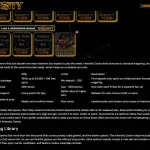
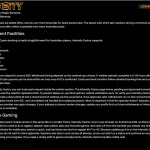
The canonical Intensity page itself currently says the casino is licensed under Curaçao eGaming. That adds brand-side support for the jurisdictional claim, but it still does not resolve the exact licence record to the standard needed for a specific number or expiry date. A reader who wants to verify the offshore licence should look for a regulator-hosted entry or a current operator licence page that clearly identifies the legal entity, number and status, then match that information against the domain being used.
This distinction matters because “offshore licensed” and “licensed in Australia” are not interchangeable. An offshore licence can indicate an operator relationship with a foreign regulatory framework, but it does not create an ACMA register entry or Australian local dispute protections. For an Australian user, jurisdiction is therefore a trust factor, not a shortcut to a local legality conclusion.
Australia access is a separate question
Current sources give conflicting access signals. The canonical brand-facing site presents Australia-focused content and visible registration controls. A separate Intensity-branded property says Australian residents are not eligible to register and attributes that restriction to the operator’s licence. Because those published properties conflict, this review does not make a guaranteed account-acceptance claim.
Before entering personal information, check the current canonical domain and the live registration flow. If Australia is excluded in the live terms, country selector or account flow, stop there. If the flow appears open, that still does not convert the service into an Australian-licensed provider. The registration guide explains the practical pre-signup checks without assuming eligibility.
This distinction is especially important in Australian casino research. Provider-side law, offshore licence status, technical website access and individual registration eligibility are different dimensions. A browser loading successfully is not a licence. A register search is not a real-time registration test. A branded page targeting Australians is not by itself proof of legal authorisation. Good trust analysis keeps each signal in its own lane.
KYC, withdrawals and account controls
Identity verification is part of Intensity’s account and payment flow. The current canonical page names photo ID and recent proof of address as usual verification items. From a trust perspective, the important point is that an operator asking for verification is not unusual by itself; what matters is whether the request is delivered through the genuine account flow, whether the requested information is proportionate, and whether users can get clear support when something fails.
Withdrawal reliability should also be assessed through process evidence rather than anecdotes. The withdrawal guide separates verified payment-method information from unsupported guarantees. A successful user review can tell you that one person reports being paid. A complaint can tell you that one person reports a dispute. Neither proves the future result for every account. Better evidence comes from current cashier rules, documented verification requirements, transaction status records and support responses tied to a specific case.
If a withdrawal is pending, keep records: request time, amount, payment method, verification notices and support transcripts. That creates a factual timeline and makes it easier to distinguish normal account review from an unexplained delay. Do not cancel and resubmit repeatedly unless the operator gives a clear reason, because repeated changes can make the timeline harder to assess.
Support and responsible-play signals
Current sources support 24/7 live chat and English-language assistance for Intensity. That is useful operationally because users can ask about verification, account status and payment issues outside Australian business hours. Support availability is still only one trust signal. A chat agent cannot substitute for a regulator, and a fast response does not prove that a disputed payment will be resolved in the player’s favour.
Responsible-play tools including deposit or session limits, reality checks and self-exclusion are reported in current verified sources. These features are worth confirming in the live account because they give users practical ways to control play. However, Australian readers should not assume BetStop directly covers an offshore online casino. BetStop is the national self-exclusion register for Australian-licensed online and phone wagering providers, and its official scope does not extend in the same way to offshore online casino services illegally provided in Australia.
That means a reader who relies on self-exclusion should verify both the operator’s own controls and the scope of Australian national tools. If gambling is no longer manageable, use broad blocking, payment and support measures rather than depending on one casino-specific control.
How much weight should user reviews carry?
User reviews can reveal recurring themes worth investigating, but they are weak evidence for hard facts. A pattern of complaints about delayed withdrawals can tell you what to ask support and what records to keep. It cannot establish that every withdrawal is delayed. Positive reviews can show that some users report smooth experiences, but they cannot guarantee solvency, future payouts or regulatory compliance.
Reviews can omit context such as bonus conditions, failed KYC, duplicate accounts, payment restrictions or the final resolution. Extract the specific claim, then look for objective evidence such as a term, cashier rule, regulator notice, transaction record or support response.
A review is a lead, not a licence check and not a payout guarantee.
A reproducible Intensity Casino trust checklist
- Check the domain. Confirm you are using the current canonical Intensity property, not a lookalike, old mirror or copied promotion page.
- Check the ACMA register. Search both the brand name and any identified operator or parent name. No Intensity or Jacked match was found in the current source check.
- Check Australia eligibility live. Published properties conflict, so inspect the current registration flow and terms before supplying personal data.
- Check the offshore licence evidence. Do not rely on a licence number copied from an old review. Match the legal entity, regulator, number, status and domain.
- Read the current terms. Focus on payments, KYC, bonus conditions and account closure rules that affect your actual use case.
- Inspect the cashier before depositing. Confirm available AUD-compatible methods, minimums, withdrawal routes and any account-specific limits shown there.
- Test support with a concrete question. Ask something verifiable, such as which current page governs KYC or withdrawals, and save the answer.
- Confirm responsible-play controls. Find limits and self-exclusion options in the live account before relying on them.
This checklist is more useful than a single trust score because each step can be repeated when the site, terms or regulatory position changes. It also prevents one positive signal from cancelling a separate risk. Good support does not create an Australian licence; an offshore licence does not resolve registration eligibility; and absence from a blocking list does not make a service approved.
Practical red flags to investigate
- A licence badge or number that cannot be matched to the current domain or legal entity.
- A registration flow that contradicts the published country restrictions.
- KYC requests delivered through unrelated messaging accounts rather than the signed-in account or verified support route.
- Withdrawal terms that change after a request without a clear dated source.
- Support responses that repeatedly avoid giving the governing terms page for a concrete rule.
- Claims that the casino is “ACMA licensed” when the ACMA register contains no matching entry.
- Marketing that presents a blocked-list absence as proof of legality.
None of these points automatically proves fraud. They are prompts to slow down and demand better evidence before depositing more money or providing more personal information.
How to interpret mixed reputation signals
A trust page is strongest when it resists collapsing every signal into one score. Local regulatory status is one layer. Offshore licensing is another. Account access, banking, KYC, support and responsible-play controls are operational layers. Reputation is a final layer built partly from user experience and partly from observable conduct. If those layers disagree, the disagreement is the finding.
For Intensity, the key disagreement is between Australia-facing presentation and a separate restriction statement. The key regulatory fact is the lack of a verified local ACMA register entry. The key offshore-licence limitation is the unresolved exact licence number. These points should be weighted more heavily than a star rating because they can be checked against current sources. User reviews remain useful for identifying questions to investigate, especially around withdrawals and support, but they do not replace the underlying records.
If you cannot establish the current domain, eligibility, governing terms and withdrawal route with confidence, do not deposit until those questions are resolved. That standard focuses on reproducible evidence rather than branding.
FAQ
Is Intensity Casino licensed in Australia?
No Australian local register entry for Intensity Casino or Jacked was verified in the current ACMA licensed-provider register check. This site therefore does not describe Intensity as Australian-licensed.
Does Intensity Casino have a Curaçao licence?
Multiple sources, including the current canonical brand page, describe Curaçao licensing. The exact current licence authority and number are not presented as verified here because source details conflict.
Is Intensity Casino blocked by ACMA?
No Intensity match was found in the ACMA blocked-sites material checked in the current source check. That absence is not an approval or legality endorsement.
Is Intensity Casino safe?
A binary safety label is not supported by the evidence. Assess the current domain, licence evidence, Australian register status, eligibility, KYC route, withdrawals, support and responsible-play controls separately.
Can Australians register?
Published Intensity-branded properties conflict on Australian eligibility. Check the current canonical registration flow and terms before entering personal data.
Does BetStop cover Intensity Casino?
BetStop covers Australian-licensed online and phone wagering providers. Do not assume it applies to an offshore online casino service outside that licensed-provider scope.
Current source note
For this review, the ACMA licensed interactive gambling provider register was checked for Intensity and Jacked with no matching text found. ACMA’s current enforcement material confirms that website blocking remains an active measure against illegal gambling services. The canonical Intensity page was also rechecked for its current Curaçao-licensing statement, support and verification wording. Exact offshore licence number and authority remain intentionally unstated because the source record conflicts.